
Replacing Windows in a Historic or Coastal Maine Home
What to Know Before You Start — From Historic District Rules to Salt-Air Durability
Maine has homes that don't fit the standard replacement-window playbook. A 19th-century Federal-style house in a historic district isn't the same project as a ranch in a newer subdivision, and a cottage a few hundred feet from the water in Kennebunkport or Cape Elizabeth faces conditions that inland homes simply don't. If your home falls into either category — or both — there are a few things worth understanding before you start getting quotes.
Check Whether You're in a Historic District First
Several Maine towns — including parts of Portland, Kennebunkport, Camden, York, and York Beach — have local historic district commissions or design review boards that regulate visible exterior changes to homes within designated districts, and window replacement is one of the most common things they weigh in on.
This doesn't necessarily mean you're stuck with your original windows or that the process is complicated, but it does mean the order of operations matters: check with your town's historic preservation office or planning department before you fall in love with a specific product. Requirements vary significantly from town to town and even between districts within the same town, and can include things like:
- Requiring true divided lites (see below) rather than simulated ones, particularly on street-facing elevations
- Matching original sash proportions, mullion patterns, and trim profiles
- Restricting materials on visible facades while allowing more flexibility on rear or non-visible elevations
- In some cases, favoring restoration of original windows over full replacement
If your home isn't in a designated historic district, none of this applies — but it's a five-minute call worth making before you commit to a product, since redoing an installation that doesn't meet local requirements is far more expensive than checking first.
True Divided Lites vs. Simulated Divided Lites
This distinction comes up constantly in historic window conversations, so it's worth explaining clearly.
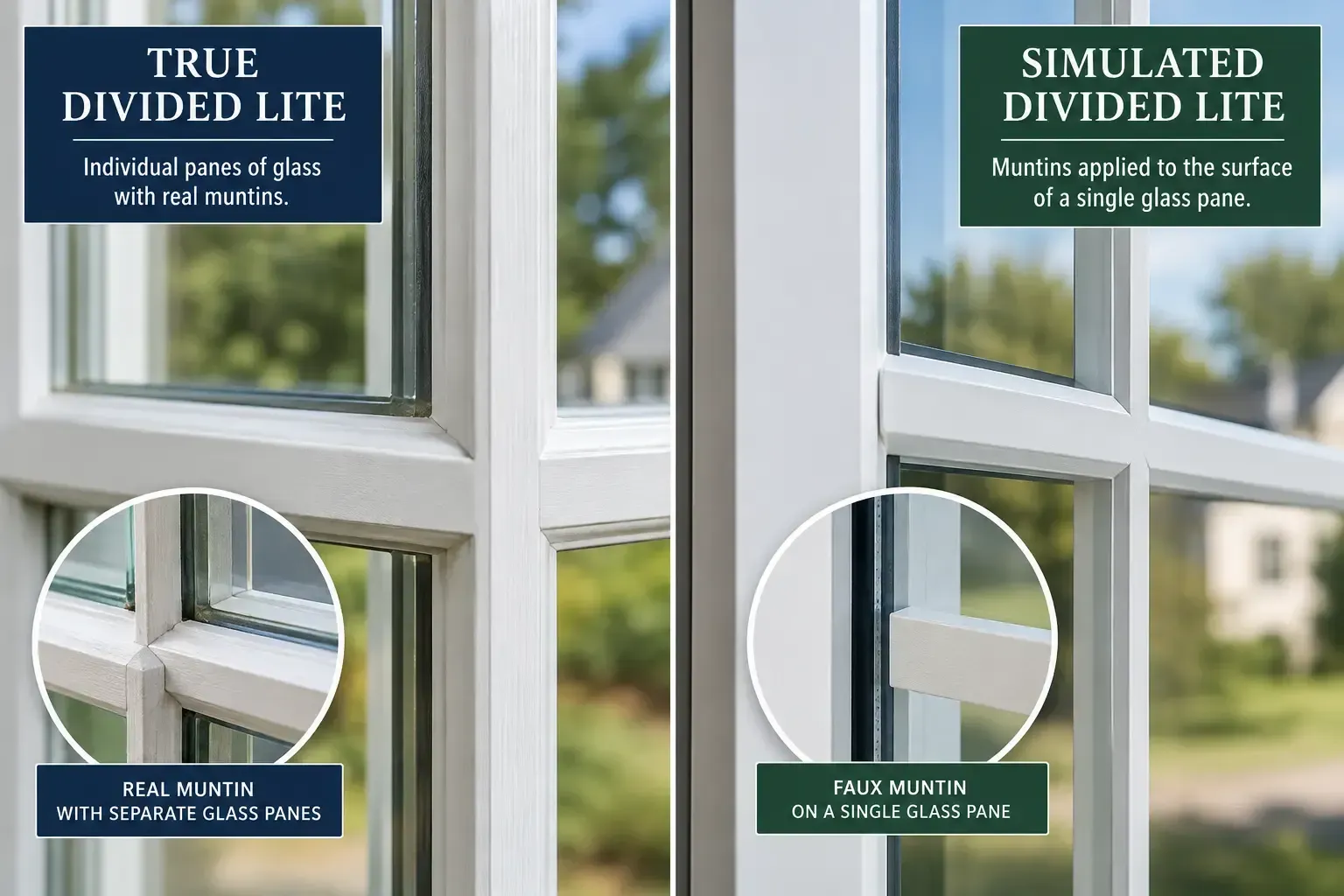
True divided lites (TDL) are windows where each small pane of glass is a genuinely separate piece of glass, held in place by actual structural muntins/mullions — the way windows were built before modern insulated glass became standard. They're the most historically accurate option and are often required in strict historic districts, but they typically cost more and can have a slight energy-performance trade-off compared to a single large insulated glass unit.
Simulated divided lites (SDL) use a single large piece of insulated glass with grille bars permanently applied to the interior and exterior surfaces (sometimes with a spacer bar between the panes to cast a shadow line that mimics a true divided window from a distance). These look convincingly authentic from normal viewing distances and typical street setbacks, perform better thermally than true divided lites, and cost less — but they may not satisfy the strictest historic district requirements.
Which one you need often comes down to your specific district's rules and how visible the window is from the street. We can walk you through both options for your specific home.
Salt Air and Coastal Exposure
If your home sits within view of the water — which describes a lot of our service area, from Cape Elizabeth and Yarmouth to Freeport, Camden, and the York Beach area — salt air is a real factor in material selection, separate from any historic considerations.
Salt-laden air accelerates corrosion on unprotected metal components: hinges, cranks, balances, and screens are all vulnerable if they're not built for coastal exposure. It can also degrade certain paints and finishes faster than an inland home would experience, and it can accelerate wear on solid wood that isn't well protected or maintained.
For coastal homes, we typically recommend:
- Corrosion-resistant hardware — stainless steel or specially coated hardware rather than standard-grade metal components
- Fiberglass or vinyl frames for their resistance to corrosion and salt-related degradation, especially on homes that don't have strict historic material requirements
- Wood-clad windows (a wood interior with a protective exterior cladding) when you want the traditional wood look and profile flexibility that historic homes often call for, without exposing solid wood directly to salt air and moisture
- More frequent inspection and maintenance on any home directly exposed to ocean-facing wind, regardless of material, since coastal conditions are simply harder on a building envelope than an inland location
When Historic and Coastal Overlap
Some of the trickiest projects are homes that are both — an older home in a coastal historic district, where you need a product that satisfies a review board's aesthetic requirements while also holding up to salt air. This is where wood-clad and fiberglass options tend to shine: they can match traditional sash proportions, true or simulated divided-lite patterns, and historically appropriate trim, while using cladding, hardware, and glazing built for a marine environment rather than a purely inland one.
Matching the Original Look, Even Where Rules Don't Require It
Even homeowners outside a historic district often want replacement windows to look like they belong on an older home—matching original proportions, sightlines, and grille patterns rather than installing a visibly modern window on a century-old facade. This is worth discussing even if no commission requires it, since it affects how the finished project looks and resale value in a neighborhood of similarly styled homes.
What This Means for Your Installation
Older Maine homes also tend to have construction details that affect installation itself — true dimensional lumber framing rather than modern nominal sizing, plaster rather than drywall interior finishes, and sometimes settling or slightly out-of-square openings after a century or more. A contractor experienced with older homes will account for this in both measurement and installation, rather than treating every opening as a standard modern rough opening.
Getting Started
If your project involves a historic district, our first recommendation is always the same: check with your town before choosing a product, so we can help you select and install windows that satisfy both the review board and your home's actual performance needs. If your concern is primarily coastal exposure, we can walk you through material and hardware options built to hold up to salt air specifically. And if it's both, that's exactly the kind of project we're set up to help with.
Frequently Asked Questions
Do I need permission to replace windows in a historic district in Maine? In many Maine towns with designated historic districts — including parts of Portland, Kennebunkport, Camden, and York — visible exterior changes like window replacement typically require review or approval from a local historic commission or design review board. Requirements vary by town and district, so check with your local planning or preservation office before choosing a product.
Will new windows still look "historic" if they're not original single-pane glass? Yes, in most cases. Modern historic-appropriate windows can replicate original sash proportions, muntin patterns, and trim details using either true divided lites or simulated divided lites, while offering far better energy performance and weather resistance than original single-pane glass.
What's the difference between true divided lites and simulated divided lites? True divided lites use separate individual panes of glass held by structural muntins, matching how historic windows were originally built. Simulated divided lites use one large insulated glass unit with grille bars applied to the surface to mimic that look, offering better energy performance at a lower cost, though strict historic districts sometimes require true divided lites on street-facing windows.
Are vinyl windows appropriate for a historic Maine home? It depends on your specific historic district's requirements and how visible the window is. Some districts restrict materials on street-facing facades but allow more flexibility on rear or non-visible elevations. Outside a historic district, vinyl is a perfectly appropriate and durable choice, including for coastal exposure.
How does salt air affect window hardware and frames? Salt-laden coastal air can accelerate corrosion on unprotected metal hardware like hinges, cranks, and balances, and can degrade certain finishes and unprotected wood faster than in an inland environment. Corrosion-resistant hardware, fiberglass or vinyl frames, and wood-clad options all help address this.
Can I get energy-efficient windows that still meet historic district requirements? Yes. Modern insulated glass, whether in a true divided lite or simulated divided lite configuration, performs significantly better than original historic glazing while still meeting most historic district aesthetic requirements. We can help match the right product to your district's specific rules.